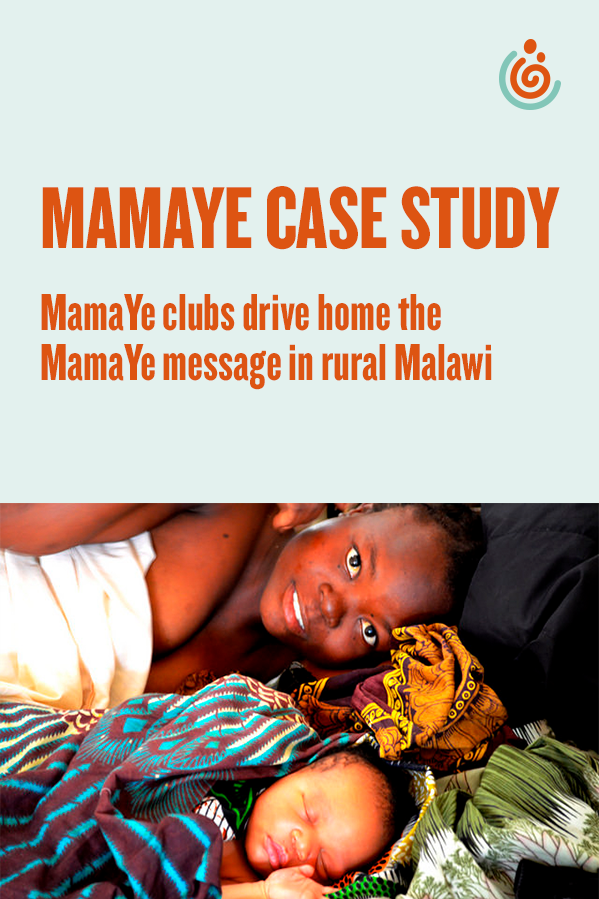
MamaYe clubs drive home the MamaYe message in rural Malawi
This case study is part of our book, MamaYe Evidence for Action Stories of Change: Selected Case Studies. Through illustrative case studies, we describe how Evidence for Action - MamaYe has strategically combined evidence with advocacy and accountability activities in
six countries, across Africa, and globally.
A learning in this case study (no.14) has been the conditions under which advocacy leads to a change in perception in the general public that maternal and newborn survival is an important and achievable goal, as well as greater political will towards that goal.
Dissemination of health information, reframing the issue of maternal health towards hope and change, and mobilising activists from the general population greatly depends on messages being shared in a way that is sensitive to local cultural understandings.
That is why Malawi’s MamaYe clubs have succeeded in driving social change: they have all involved the initial mobilisation of a small number of super-activists who have in turn mobilised others. Building a MamaYe movement has been even more successful when
activists are recruited as members of existing associations such as youth clubs, which come with an established way of working and strong social ties.
Evidence for Action-MamaYe. (2015). MamaYe clubs drive home the MamaYe message in rural Malawi. London: E4A-MamaYe.