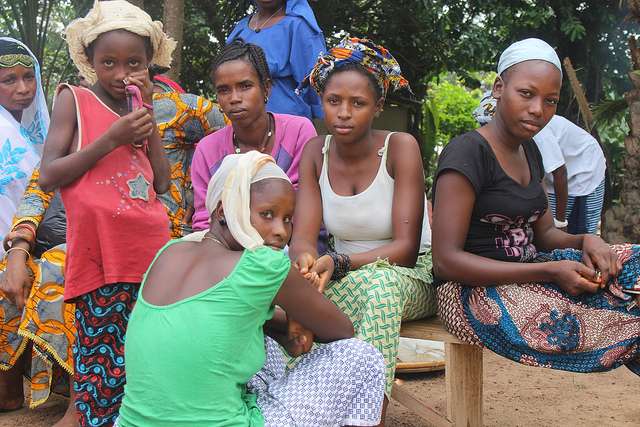
Girls Grow: A vital force in rural economies - a girls count report on adolescent girls
2011
This report focuses on the challenges faced by rural adolescent girls, and on how we can work to strengthen their role as agents of change in their communities in order to bring about economic and social transformation.
This report published by the Chicago Council on Global Affairs seeks to focus attention on the challenges faced by rural adolescent girls, and on how we can work to strengthen their role as agents of change in their communities. This report argues that empowering rural adolescent girls can contribute towards bringing about economic and social transformation in rural areas all over the world.This report shows that rural adolescent girls face a triple challenge which affects their sexual and reproductive health:
- The first challenge relates to location: rural areas are disadvantaged with regard to infrastructure and services, including healthcare.
- The second challenge relates to gender: Deeply entrenched social and cultural norm can contribute towards over-burdening or discriminating adolescent girls. In addition, rural adolescent girls often deal with important workload on a daily basis. Lastly, they can be vulnerable to early marriage – a phenomenon that disproportionately affects rural girls and potentially increases their reproductive health risks.
- The last challenge is related to their age: if much attention has been directed towards improving the health of children under five, there has been much less focus on the health of adolescents.
- Integrating adolescent health as a priority in national systems and policies
- Increasing rural girls’ access to information and services via school and community centres
- Encouraging growth of nutritious indigenous foods, local manufacturing of vitamins, local food processing, and addition of micronutrients, to improve adolescents’ nutrition
- Providing greater services to young expecting mothers
- There are important disparities between rural and urban areas with regard to access to health information and service.
- Rural areas are also characterised by a significant shortage in terms of human resources for health. This report mentions that rural areas are served by 38% of the total nursing workforce and below 25% of the total physician workforce.
- Rural adolescent girls have little access to sexual and reproductive health information.
- Rural adolescent girls are particularly affected by anaemia and inadequate nutrition. This in turns impacts negatively their health during pregnancy as well as pregnancy outcomes, such as an increased risk of low-birth weight babies and increased risk of childbirth complications.
- Rural adolescent girls are more likely to experience early pregnancy: rural adolescent birth rates globally are almost double those for urban areas.
- Rural adolescent girls are also vulnerable to pregnancy-related illnesses as well as pregnancy complications and maternal mortality.
- Girls below 15 years old are five times more likely to die while giving birth than women above 20. Combined with pre-existing medical conditions, such as anaemia, and insufficient care at all stages of the maternal health continuum, this increases the risk of maternal mortality amongst rural adolescent girls.
- There are also important disparities between rural and urban areas with regard to skilled birth attendant coverage. In rural areas, only 28% of births are assisted by a skilled attendant, against 79% in urban areas (global estimate).
Chicago Council on Global Affairs. (2011). Girls Grow: A Vital Forces in Rural Economies - a girls count report on adolescent girls. Chicago: Chicago Council on Global Affairs.